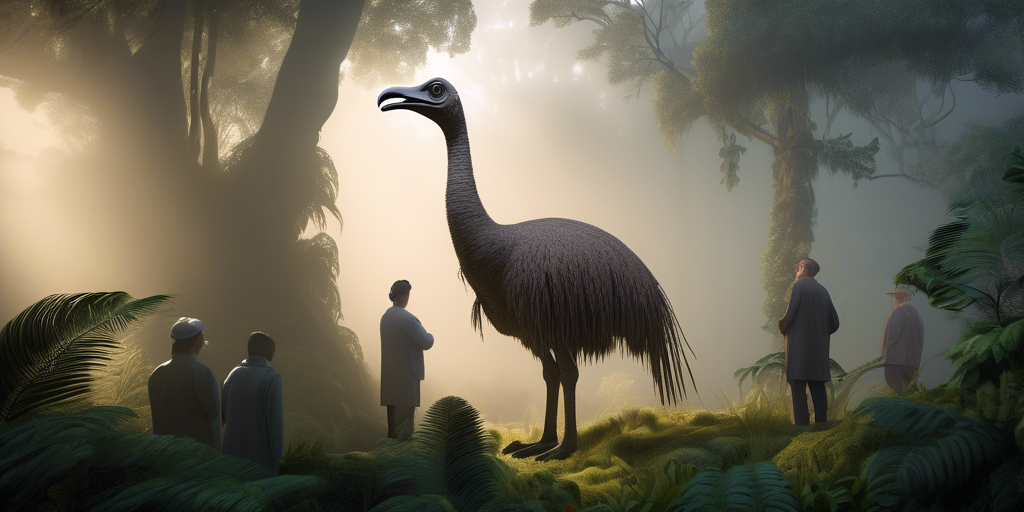
In a move captivating scientists and the public alike, the Colossal Moa project is making headlines worldwide. Colossal Moa seeks to bring back New Zealand’s enormous flightless bird, the moa, which disappeared centuries ago. This ambitious Colossal Moa initiative combines science, technology, and cultural heritage in an unprecedented way.
🎯 Peter Jackson Joins the Revival Effort
Oscar-winning filmmaker Peter Jackson, best known for the Lord of the Rings trilogy, has thrown his support behind the Colossal Moa project. Jackson is collaborating with Colossal Biosciences and New Zealand’s Ngāi Tahu Research Centre. His involvement brings not only Hollywood attention but also a deep personal fascination with New Zealand’s lost giants.
The partnership is more than a vanity project. Jackson joins a Māori-led scientific team, aiming to restore a crucial piece of New Zealand’s ecological and cultural legacy. Their plan involves cutting-edge gene editing and indigenous knowledge, with hopes to resurrect all nine species of moa.
💡 Cutting-Edge Tech Meets Cultural Leadership
Colossal Biosciences, already known for its work reviving the dire wolf, is spearheading the technical side. The biotech company is now focused on building complete genomes for all moa species. If successful, it could result in the return of a bird that once stood up to twelve feet tall and weighed over 400 pounds.
The Ngāi Tahu Research Centre plays a pivotal role, ensuring the project honors indigenous perspectives and environmental responsibility. By blending advanced genetic engineering with Māori stewardship, the initiative seeks not just scientific glory but community and ecological healing.
🚀 De-Extinction: Real-World “Jurassic Park”?
While de-extinction sounds like science fiction, recent breakthroughs have made it more plausible than ever. After successfully cloning the dire wolf in 2024, Colossal Biosciences has set its sights on the moa. The bird’s size, uniqueness, and ecological role make it a prime candidate for restoration.
Still, challenges remain. Ethical concerns, ecological impacts, and technical hurdles must be addressed. Supporters argue that reintroducing a herbivore like the moa could help balance New Zealand’s forests, which have evolved in its absence.
📊 The Next Steps: Hopes and Skepticism
As of early 2025, genome mapping is well underway. The Colossal Moa team hopes to hatch the first chicks within the next few years. However, global scientists urge caution, emphasizing the unpredictability of reintroducing extinct species into modern ecosystems.
Public reaction in New Zealand is mixed but largely hopeful. Many see the project as a bold blend of modern science and traditional respect, potentially setting a model for future de-extinction efforts worldwide.
Curious to see if New Zealand’s giant bird will walk the Earth again? Stay tuned for updates, and don’t miss your chance to witness history. Want to keep this story alive? If you found this fascinating, your friends might too—compartilhe!